Flight Delayed or Cancelled? Your Compensation Rights in the UK and EU
10.09.2026
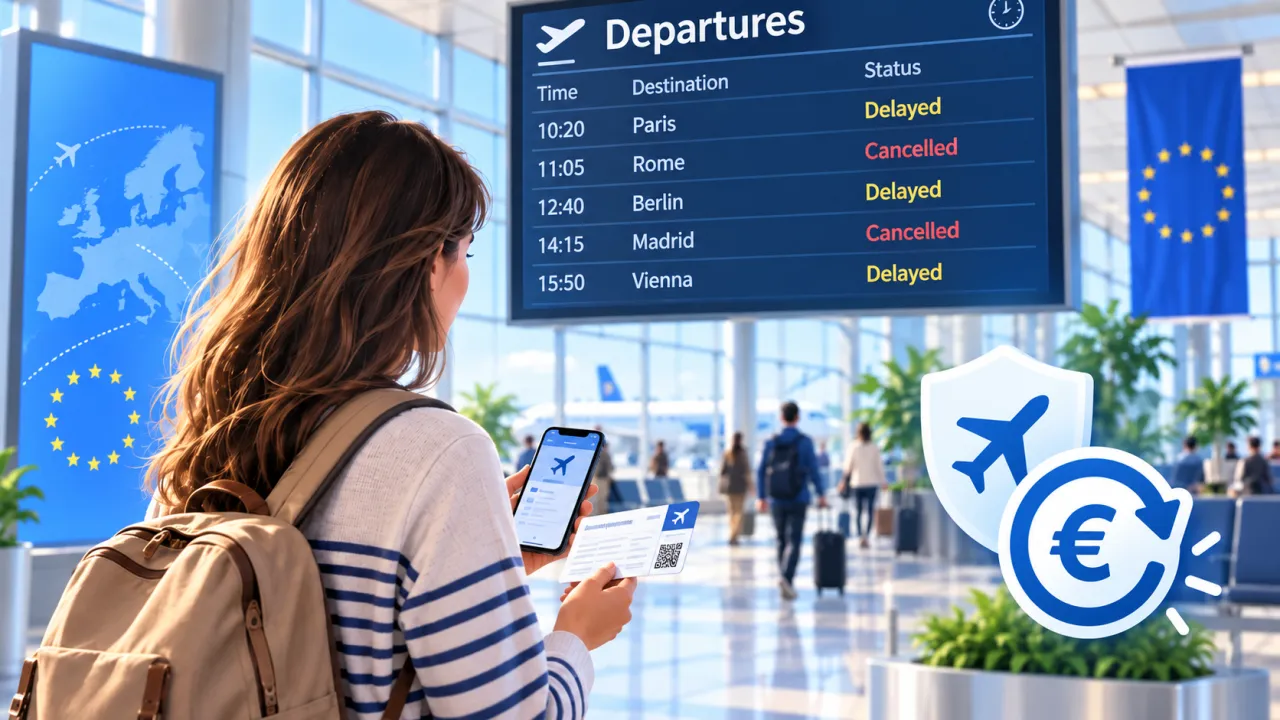
Flight delays and cancellations can quickly turn a planned journey into a stressful experience. But in many cases, passengers travelling from the UK or within Europe may be entitled to compensation, a refund, alternative transport, meals or hotel accommodation.
This became especially relevant on 8 September 2026, when a technical problem affecting the UK’s air traffic control provider, NATS, caused significant disruption across major UK airports.
But does every delayed or cancelled flight automatically mean you can claim compensation?
Not necessarily.
Here is a simple guide to your rights under UK261 and EU261.
What Is EU261?
EU261 protects passengers when flights are significantly delayed, cancelled or affected by denied boarding.
The rules generally apply when you are:
- flying within the EU;
- departing from an EU airport;
- or arriving in the EU from outside the EU on an EU airline.
You do not need to be an EU citizen to benefit from these protections.
What About Flights From the UK?
The UK has its own similar rules, commonly known as UK261.
They generally apply to flights:
- departing from a UK airport on any airline;
- arriving in the UK on a UK or EU airline;
- or arriving in the EU on a UK airline.
For example:
London to Bucharest: UK261 applies because the flight leaves the UK.
Bucharest to London: EU261 applies because the flight leaves an EU country.
London to Chișinău: UK261 applies because the flight starts in the UK.
When Can You Receive Compensation?
For flight delays, one of the most important numbers is:
3 hours.
If you reach your final destination three hours or more later than scheduled, you may be entitled to compensation, provided the delay was within the airline’s responsibility.
It is normally the arrival delay, not simply the departure delay, that matters.
How Much Compensation Can You Receive?
Under EU rules, compensation can reach:
Flight distance Possible compensation
Up to 1,500 km €250 1,500–3,500 km €400 Over 3,500 km Up to €600 Under UK rules, compensation can reach:
Flight distance Possible compensation
Under 1,500 km £220
1,500–3,500 km £350
Over 3,500 km Up to £520
These amounts are generally based on the distance and length of delay, not on how much you originally paid for your ticket.
What If Your Flight Is Cancelled?
If your flight is cancelled, the airline will normally have to offer you a choice between:
- a refund;
- rerouting to your destination as soon as possible;
- or rerouting on a later date.
You may also qualify for compensation if the cancellation happened less than 14 days before departure.
However, the reason for the cancellation is very important.
What Are “Extraordinary Circumstances”?
Airlines normally do not have to pay fixed compensation when the disruption was caused by events outside their control.
These can include:
- severe weather;
- air traffic control restrictions;
- security risks;
- some strikes;
- political unrest;
- or other exceptional events.
A technical problem with an airline’s own aircraft is not always treated in the same way as a national air traffic control problem.
What About the UK Air Traffic Control Problem on 8 September 2026?
The disruption on 8 September was caused by a technical problem affecting NATS, the UK’s air traffic control provider.
Because air traffic control is outside the direct control of individual airlines, delays and cancellations directly caused by this incident are likely to be treated as extraordinary circumstances.
This means many passengers affected may not qualify for the usual £220–£520 or €250–€600 fixed compensation.
However, this does not mean passengers have no rights.
No Compensation Does Not Mean No Rights
Even when extraordinary circumstances apply, airlines may still have to provide assistance.
Depending on the delay, this can include:
- food and refreshments;
- hotel accommodation if an overnight stay is necessary;
- transport between the airport and hotel;
- rerouting;
- or a refund in certain circumstances.
So even if the airline says the disruption was outside its control, you may still be entitled to help.
What If You Pay for Food or a Hotel Yourself?
During major disruption, airlines may not always organise accommodation or meals immediately.
If you need to pay yourself, keep your spending reasonable and save all receipts.
This can include:
- meals;
- non-alcoholic drinks;
- hotel accommodation;
- and necessary transport.
You can then ask the airline to reimburse these costs.
What If the Delay Is More Than Five Hours?
Under UK passenger rights, if your flight is delayed for more than five hours and you decide not to travel, you may be entitled to a refund.
This can be useful when a long delay means the purpose of your journey has effectively disappeared.
How Do You Make a Claim?
You normally do not need to use a compensation company.
You can contact the airline directly and provide:
- your booking reference;
- flight number;
- date of travel;
- scheduled and actual arrival times;
- details of the delay or cancellation;
- and copies of any receipts.
It is also useful to keep your boarding pass and screenshots of any airline messages explaining the disruption.
What If the Airline Rejects Your Claim?
If your claim is rejected, check the reason carefully.
Some UK airlines are members of an Alternative Dispute Resolution (ADR) scheme, and in some cases you may also be able to seek further assistance from the Civil Aviation Authority.
For EU flights, passengers may contact the relevant national enforcement authority.
Don’t Forget Your Travel Insurance
If airline compensation is not available because the disruption was caused by extraordinary circumstances, check your travel insurance.
Some policies may cover delays, missed departures, additional accommodation or other travel-related costs.
The Simple Rule to Remember
When your flight is disrupted, ask two separate questions:
Am I entitled to financial compensation?
and
Am I entitled to assistance, rerouting or a refund?
They are not the same thing.
Even if you cannot claim fixed compensation, you may still have important passenger rights.
Final Thoughts
The UK air traffic control disruption on 8 September 2026 is a good example of why passengers should understand the difference between airline compensation and passenger assistance.
Not every delayed or cancelled flight automatically results in a cash payment. But passengers should not assume they have no rights simply because the problem was outside the airline’s control.
Check the reason for the disruption, understand whether UK261 or EU261 applies to your journey, keep your receipts and contact your airline directly.
At MoneyTO, many of our customers live in the UK while staying closely connected with family and friends across Europe and around the world. Understanding your travel rights can make unexpected disruptions a little easier to manage.
MoneyTO helps customers send money safely and conveniently to more than 80 countries worldwide.
Please note: This article is for general information only and does not constitute legal advice. Passenger rights depend on the individual circumstances of each journey. Always check the latest guidance from the UK Civil Aviation Authority, the European Union or your airline.